


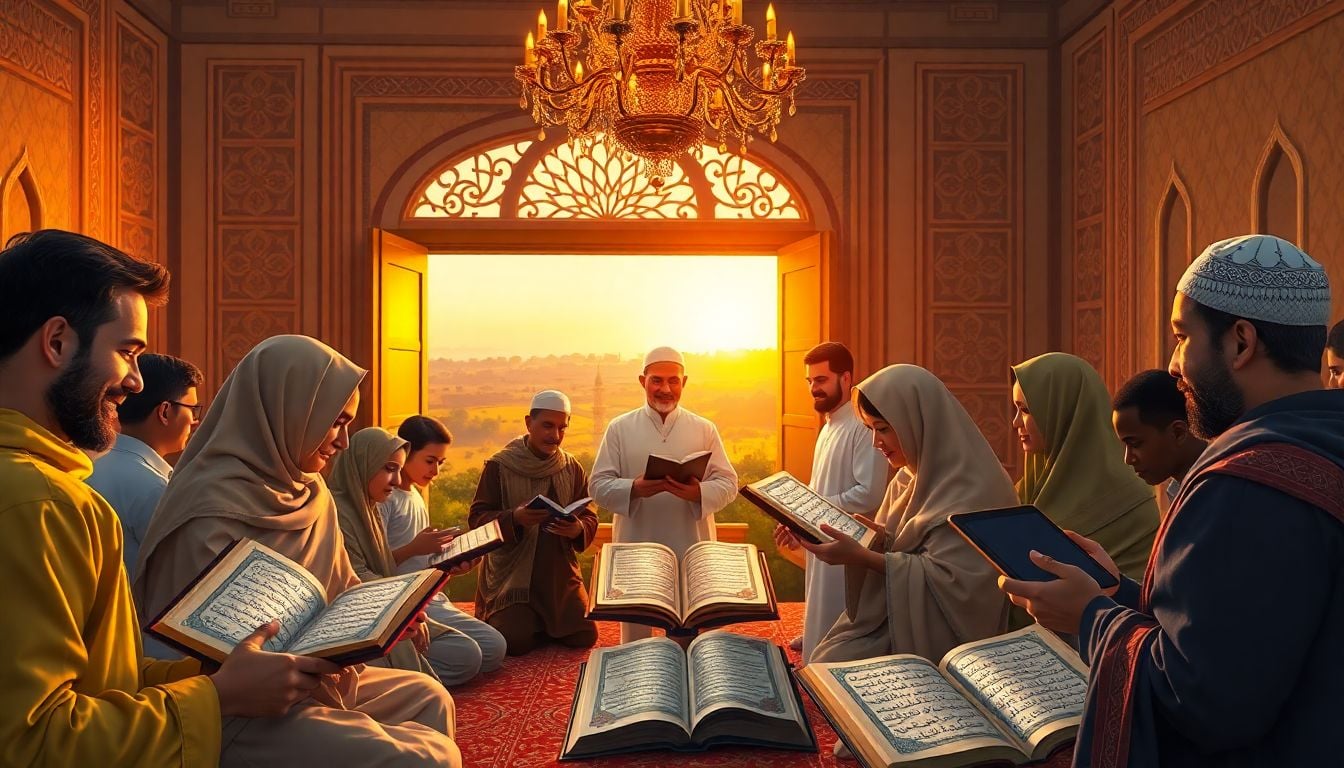
Exploring the Impact of Reading and Understanding Sacred Texts
Introduction
Having the ability to read and write isn’t just about school or jobs. It shapes how we connect with our faith and values. For Muslims, the Quran guides daily life, spiritual growth, and understanding God’s message. But did you know that literacy plays a vital role in shaping how people engage with the Quran? Without the skills to read and interpret its words, access to this sacred text can be limited. Literacy influences who can understand, teach, and spread the Quran’s teachings. This connection isn’t just about language; it deeply affects faith and cultural identity around the world.
The Historical Role of Literacy in the Revelation and Preservation of the Quran
The Revelation of the Quran and the Importance of Literacy in 7th Century Arabia
When Prophet Muhammad received the revelations of the Quran over 1400 years ago, most Arabs relied heavily on oral tradition. Many people memorized verses, passing teachings by word of mouth. Written texts existed but were rare and often used by scribes and scholars. Literacy wasn’t widespread, yet the Quran was preserved through memorization and oral recitation. It was only later that these revelations were compiled into written form. Writing helped ensure the message survived after Muhammad’s time and prevented distortion.
Manuscript Preservation and the Spread of Islamic Knowledge
Once the Quran was written down, monks and scholars began copying manuscripts by hand. These carefully made copies spread across the Muslim world. Calligraphy became a respected art, helping to beautify and safeguard the sacred text. Literacy enabled scholars to preserve the Quran accurately and share it widely. As more people learned to read and write, the knowledge of Islamic teachings grew. This helped the religion expand beyond Arabia to Africa, Asia, and Europe.
Influence of Literacy on Early Islamic Scholarship
Early Islamic scholars didn’t just memorize the Quran; they studied it deeply. Schools focused on reading, understanding, and interpreting its verses. This shaped the development of tafsir—Islamic commentary—and fiqh, or Islamic law. Literacy allowed scholars to explore complex ideas and communicate their insights clearly. Without literacy, these rich traditions of meaning and law would not exist. Writing and reading became essential tools for deepening faith and guiding society.
Literacy Rates in the Muslim World and Their Impact on Quran Engagement
Current Global Literacy Statistics Among Muslim Populations
Today, literacy levels vary a lot across Muslim countries. Some nations boast high literacy rates, like Malaysia and the United Arab Emirates, with over 90% of adults able to read and write. Others, especially in rural regions or conflict zones, lag behind, with literacy below 50%. Gender disparities also exist, often limiting women’s access to education and Quran learning opportunities. These differences affect how many people can actively engage with the Quran directly.
The Effect of Literacy on Quran Reading and Personal Devotion
When people can read, they experience a deeper connection to the Quran. Literacy allows believers to read the holy texts for themselves instead of relying solely on others’ recitations. This personal relationship helps in understanding divine guidance, building faith, and practicing more regularly. Those with literacy skills can also grasp the meanings behind complex theological concepts, making their spiritual journey more meaningful.
Literacy and Access to Quran Education in Different Societies
Some communities rely on memorization (hifz) to preserve the Quran. While powerful, this method doesn’t always teach understanding or interpretation. Formal Quran education, which mixes reading, comprehension, and translation, equips learners with broader knowledge. Accessible literacy programs enhance Quran education, creating more informed and confident followers who can reflect on their faith.
The Role of Literacy in Interpreting and Applying Quranic Teachings
Reading Comprehension and the Nuances of Sacred Texts
Understanding the Quran isn’t just about recognizing words. It’s about grasping context, metaphor, and subtle meanings. Literacy enhances a person’s ability to see these nuances. Without good reading skills, misinterpretations are more likely, which can lead to incorrect beliefs or practices. Clear comprehension ensures your faith aligns with the true message of the Quran.
Modern Tools and Resources for Quran Literacy
Today, technology makes Quran learning easier than ever. Apps provide translations, tafsir (exegesis), and audio recitations. Online courses and websites connect learners worldwide. These tools remove barriers, allowing anyone with internet access to deepen their understanding. They democratize knowledge, broadening access to authentic Islamic teachings.
Literacy as a Gateway to Personal and Societal Change
When communities promote literacy alongside Quran education, positive change happens. Better-educated individuals not only strengthen their faith but also uplift their communities. Examples show that improved literacy fosters respect, cooperation, and social progress. Teaching people to read and understand the Quran empowers them to make better personal and societal choices.
Challenges and Opportunities in Promoting Quran Literacy
Barriers to Literacy in the Muslim World
Many Muslims face obstacles like poverty, gender inequality, and political instability. Language barriers and complex scripts also hinder learning, especially for children and women. Overcoming these challenges requires tailored solutions that consider local contexts and needs.
Encouraging Quran Literacy through Educational Reforms
Incorporating Quran studies into broader literacy campaigns can boost knowledge. Schools and community programs should focus on both reading skills and Quranic comprehension. Religious leaders and educators play a key role in motivating students and empowering communities.
Innovative Approaches to Enhance Quran Engagement
Using technology practically can make a big difference. Social media, videos, and interactive apps appeal to many learners. Audiobooks and visual aids help those who struggle with traditional reading. Supporting grassroots literacy initiatives leads to healthier, more spiritually connected societies.
Conclusion
The link between literacy and the Quran runs deep. Being able to read, understand, and interpret the Holy Book shapes how Muslims practice and share their faith. Improving literacy opens doors to better access, comprehension, and reflection on divine teachings. As communities gain skills, they not only preserve Islamic knowledge but also foster personal growth and social change. Empowering people through literacy means nurturing a more informed, faithful, and united Muslim world.